A Lyrical RENalysis by D.B. Myrrha B.A., M.A.T, O.G., A.B.C., O.P.P.*
*Not a doctor
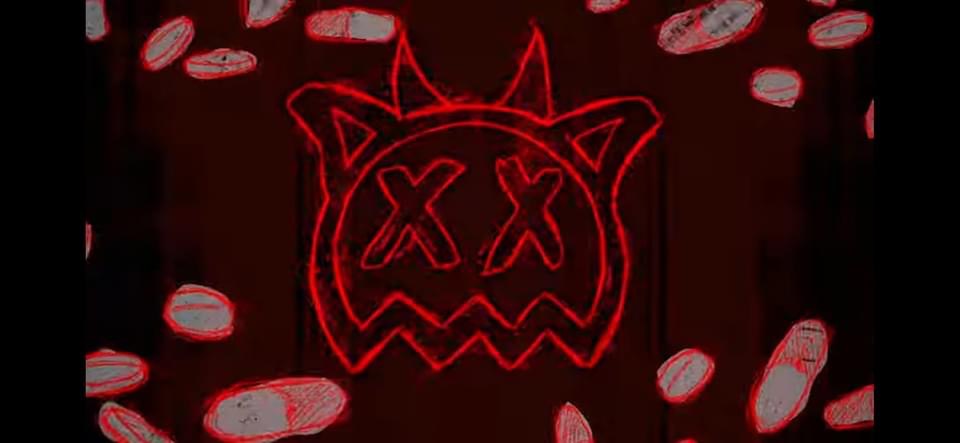
Introduction
After the overture, the main body of Sick Boi opens with the titular song. (The official version of the album closes with the song “Sick Boi pt. 2.) Together, these songs parenthesize the album (which many have compared to a Rock Opera) with a clear restatement of the album’s themes (laid forth in the late-comer overture, “Seven Sins”)
“Sick Boi” obviously chronicles Ren’s battles with physical illness, but also addresses the recurring themes of mental and social illnesses. As one of the first videos to follow “Hi Ren” (“What You Want” and “The Hunger” appeared earlier, as they were written before the concept of Sick Boi was developed), it packs a punch. Many reactors lamented the length of the song, as it was not very long and left the listener wanting more (an excellent strategy, in my opinion.)
The video was shot in the same location as “Hi Ren” (without the interruptions, as I believe it was shot in the daylight hours) and revisits the stark, antiseptic feel of the previous performance. Like “Hi Ren,” the singer is clad in a hospital gown. (This is a recurring costume for Ren; he donned it first for “Violet’s Tale” [2022].)
“Sick Boi” packs a lot into a 2-minute song. Spoken word. Personal exposition. Social commentary. A one-two to invite us into the rest of his story.
Lyrics
Intro Part 1
Therapist: Hi Ren, Thank you for coming in today
Ren: Thank you for seeing me…
Therapist: Looking at your file here
it seems there’s a very apparent interplay between your emotional state and your physical body.
Have you ever heard of the trauma response?
Ren: No, I don’t think so.
The song begins with the words “Hi, Ren.” (Ironically the song “Hi Ren” does not begin that way, but with the words, “Hi there, Ren.”) This is the third song in which he greets himself (it also happens in “What You Want”, which appears later on the album although was an earlier-written song.) In the verse, Ren is speaking to a therapist/doctor who is supposedly there to help him. Instead of listening to him, however, she automatically diagnoses him, assuming his illness is psychosomatic; simply a physical manifestation of psychological trauma.
The intro is prose, and therefore has no rhyme scheme or particular rhythm. However, the video opens with Ren in a sitting position against a wall. His body is folded with his hands clutching his knees. His body is tense, and he seems to be panting, emitting a series of violent grunting noises symbolizing Ren’s frustration. His hands lift to his head, cradling it. This scene demonstrates how emotional, mental, and physical stress tightens our muscles and limits our ability to express ourselves clearly. Even the beat underlying the spoken portion echoes this, with an intense, aggressive pulse. This continues, along with the image of shallow, labored breathing, as Ren finds himself before the doctor, and lights his cigarette (another stress reaction.)
Intro part 2
Basically, our bodies can get stuck in a negative feedback loop
Our subconscious can repeat patterns from the past
Which can have a drastic effect on our biology.
Essentially, your mind is making you sick.
While the trauma response is a real thing (See “The Body Keeps the Score” by Bessel A. Vanderkolk, 2014), it is not Ren’s true problem. His illness is infinitely more physically complex than just mental/emotional trauma (although PTSD is certainly a lasting effect of a decade of suffering.) To Ren, it must seem as if, once again, the doctors are brushing off his condition, and trying to look for an easy fix, in this case, talk therapy and more pills.
In his song “Depression” (circa. 2018) Ren mentions the fact that therapy, at least in the midst of his struggles with his disease, did not help.
I’ve got the sweater
Poster child Bipolar ADHD, Therapists wet dream
I don’t wanna talk about my father
I don’t wanna talk about my dead friend
I don’t wanna talk about myself
I’m sick of talking about my self
I’m sick of talking about my self
And realising that talking about myself never, ever helps
Ren has had trauma in his past for sure, which he touches on in his music: his parents’ divorce, his relationship with his father, the suicide of his childhood best friend. However, with the physical illness taking precedence, simply talking about his trauma is futile in light of the trauma happening minute-by-minute in his body.
An interesting side note, the therapist (depicted flawlessly by his friend Mia), was actually voiced by Jane, the lovely Irish girlfriend (now wife, I believe) of his Big Push bandmate, Glenn Chambers.
The beat continues. When the therapist blithely states that his mind is what is making him sick, the word echoes, hanging in the air like an indictment. Ren, or at least his mind, is the falsely accused.
A musical shift now adds to the drama. A choir enters the scene. The vocals here, a song called “Bre Petrunko”, sung by the Koutev Bulgarian National Ensemble (video below) are high pitched and childlike. in Bulgarian, a Slavic language, the song, especially with the pulsing beat behind it, could be described as “haunting” or “spooky”. Many horror films use music with foreign lyrics to create a “demonic” ambiance. (These films often use Latin church music, so this is a nice shift.) This reflects the “demons” (metaphorical and imagined) that haunt Ren in the midst of his illness, representing either his psychosis or the writhing demon that is his unending pain. FraynMusic (on YouTube) created a trap version which is particularly creepy and feels similar to Ren’s version. The video found here, https://youtu.be/Y525AES-tdM?si=QV1AIph8f-FFbYWo, is quite bloody.
On an interesting note, the lyrics of Bre Petrunko are not spooky or demonic at all. The Bulgarian folk song is about a boy courting a girl by joining in a village circle dance. Kinda takes the edge off. I love how Ren used it in a twisted form to create an entirely different ambiance.
On another interesting note, this song was also sampled in the song “Gaspar Yanga” by D. Smoke ft. Snoop Dogg.
Verse One
Bar One
Sick boy, sick boy, bitten by a tick boy
Looking for that fix boy, anabolic sterroroids
Stem cell poster boy, pass out, white noise
Quick fix, snake oil, I’m about to break boy.
The video to “Sick Boi” was released on January 19, 2023; the first video to come off the heels of “Hi, Ren,” and the first to directly reference the album. While “Hi Ren” touched on Ren’s struggle with illness, here he lays it out for the listener. He was bitten by a tick, contracting Lyme disease. Doctors do not routinely test for Lyme, and therefore were at a loss as to what caused his malaise. Forced to seek the cause on his own, Ren tried everything he could think of, both traditional and non-traditional. Although stem cells are mentioned close to the top, they were actually one of the last (and most effective) treatments he found to ease his torment.
The bars begin, and Ren is telling us his story.
The repetition of the words “sick boi” emphasizes his theme and punctuates the bar. “tick, boi” offers an internal embedded in the end rhyme which packs a nice punch. The /i/ sound from sick and tick is mirrored in the /i/ in bit(ten). The /i/ repeats in the second line with fix (also repeated, although not emphasized) in the fourth line. The /oi/ sound, however, carries through from boy to –oids in sterreroids (we’ll get to that in a minute), noise, and oil.
The way sterreroids is pronounced and spelled here is not an error. It’s a device Ren uses quite often, either purposefully or instinctively (mostly purposefully) to fit words to a rhythm. It’s called a metaplasm, and it’s defined as the alteration of regular verbal, grammatical, or rhetorical structure usually by transposition of the letters or syllables of a word or of the words in a sentence. In other words, cutting or adding syllables for dramatic effect. Ren also has a personal tendency towards malapropisms (using the wrong word with a similar sound) which is just part of his charm, like his wit or his lousy, “can’t be arsed” spelling.
[Ed. Note: Renegade Jennifer Uhlein-Jansen pointed out that in Ren’s original lyrics, steroids was spelled correctly. However, with the metaplasmic extension, steroids becomes sterroroids. Terror is certainly part of the story.]
The lines in this bar utilize an unusual meter: trochaic tetrameter. A trochee is a metrical foot (set of syllables) wherein the first syllable is stressed and the second is unstressed.
Sick boy, sick boy, bitten by a tick boy
The use of this meter creates a sound that mimics the rhythm of a labored or short breath IN-out IN-out, which is also the result of exasperation, frustration, or illness.
Bar Two
Oh, what a shame, he’s in pain. Have another go.
Take another pill, here, take a couple more.
Let’s see how you’re doing in another week or so
You’ll be feeling worse when the side effects will show.
For anyone who has been on the medication merry-go-round, the frustration is palpable. It is overwhelming and exhausting to try pill after pill, worthless treatment after worthless treatment, to no avail. When there is little to no relief, and all the doctors do is say “let’s try again.” It’s easy to lose faith in doctors or to feel like a hapless guinea pig.
The rhythm changes here, common in Ren’s songs to shake things up with each new bar (every four lines or so), as does the rhyme scheme. This verse is especially interesting in the way each line seems to scan differently, creating a complexity that is unsurprising (yet always delightful) coming from Ren.
It’s interesting how the rhyming words oh and go in the first line act as parentheses to three triplets: “what a shame”, “he’s in pain”, “have another”. Shame and pain offer an internal rhyme to carry the line along to the end. The second line is a strong one lyrically, but the “rhymes” are just gentle assonance of the first. The /a/ reflected in take. The /ee/ in here repeating and completing he, and the /o/ in more creating a near rhyme with go.
The second line is two groups of five syllables (both starting with take), linked by a single syllable: here.
The third line doesn’t really have a discernable metrical pattern. Thirteen syllables, with no obvious rhythmic pattern (the greatest emphasis seems to be on the words doing and week. This line seems to echo the prose of the introductory and bridge sections. The last line, however, seems to follow a similar style, with emphasis on the alliterative words worse and week. Words in the same approximate position as the lines above, providing rhythmic flow in that manner.
The /ee/ sound, however, continues to flow through the last two lines with see, week, be, and feeling. The last lines rhyme reliably with the first (go/so/show). Only the second line is an imperfect match.
Bar Three
De-realization, medical patient
losing patience with the process, walking hand-in-hand with Satan
Complications with the medication, inflammation, dehydration
Inhalation, aggravation, building up a toleration
Ren has tried it all, to little avail. The symptoms of the disease, aggravated by medication side-effects only adds to the problem. De-realization is a (not uncommon) mental state in which one feels detached from one’s surroundings, and people and objects don’t seem real. The one who suffers recognizes that this state is not normal, but it must be very disconcerting. This, along with the feeling of “walking hand in hand with Satan” seems to refer to Ren’s mental illness; specifically, the short period of psychosis he suffered in 20 15.
The other symptoms he mentions are common side-effects of medications for physical and mental dis-ease. Jumping from pill to pill to pill with no relief and added side-effects, it’s no wonder the patient loses patience with the process as the months (or in Ren’s case years) go on.
Shaking it up again in bar three, Ren plays with his syllables again. As a poet myself, I realize that, unless you are specifically attempting a certain meter (e.g. iambic pentameter) most poetic meter is simply worked by ear. So it is unlikely (albeit not impossible) that Ren did not set out to write this verse in this specifically unusual manner; it just “sounded right”.
This verse is written with unusual grouping of syllables:
Line 1: 5/5 De-realization/medical patient
Line 2: 8/8 (or 4/4/4/4) losing patience with the process/ walking hand-in-hand with Satan
Line 3: 5/5/8 (or 4/4) Complications with/ the medication/ inflammation dehydration
Line 4: 8/8 (4/4/4/4) Inhalation, aggravation/ building up a toleration
Metrically, the verse rises line by line (10/16/18), with a gentle retreat at the end (16), once again, the rise and fall of breath, or the clenching, unclenching of fists. We must recognize, however, that there is only a slight relaxation at the end of the quatrain, nowhere near a full release.
Poetically, the most obvious device used in this verse is repetition, with the -ation suffix being the star. It is repeated eight times, ten if you include the homonyms patient and patience. Not a lot of other rhyme is needed (although Satan is a nice touch.) /d/ is a voiced stop sound, so it punctuates a line, as it does here with the /de/ in de-realization and dehydration. Still, it’s the –ations that carry the day.
Bar Four
Drown sucker, drown sucker, drown sucker, drown,
I’ve been feeling like I’m drowning with my feet upon the ground
I’ve been screaming, I’ve been shouting, but I never make a sound,
I’ve been looking for a way out, but I always seem to drown.
Meanwhile, the pain does not cease. The depression deepens, the mental health deteriorates, and the body wastes away. How can hope continue? In Ren’s early videos and blogs, you can see his hopes disintegrate until it seems they have disappeared. Still, despite it all, despite failure after failure, he continues to look for a way out. This sick boi is tenacious as hell, but it takes all he has to keep his head above water.
It seems as if the universe is holding him under water, telling him to just die already (thank heavens our boi is stubborn as fuck.) The repetition of drown brings to mind someone being pushed under water repeatedly. He keeps rising to the surface, but never quite is able to catch his breath. The repetition of the personal pronoun I centers the verse on his struggle to survive. I’ve been feeling/I’m drowning/ I’ve been screaming/I’ve been shouting/I never make a sound/I’ve been looking/ I always seem to drown…
The main repeating vowel sounds in the verse are the short /u/ in sucker, the double vowel /ee/ in feeling, feet, screaming, and seem, and the dipthong /ou/ (ow), which appears in the end rhymes (drown, ground, sound) as well as the internally alliterative words sound, shouting and out.
The choir pauses during the first line, pausing as Ren struggles for breath: drown sucker, drown sucker, drown sucker, drown.
Bridge pt. 1
Is this all making sense, Ren?
Uh, yeah, I think so-
Good.
What I propose we do is we try to pinpoint the exact experiences
from the past that are keeping you stuck.
What can you tell me about your childhood?
In return, all the therapist wants to talk about (and up until now, she has done a lot of talking and very little listening) is his childhood trauma, trying to trace his illness back to childhood (blame the parents…)
As in the intro, the bridge returns to the use of prose. In Shakespeare’s plays, he would occasionally switch to prose to make a salient point about the nature of reality (He had other times and reasons to do so as well, but it was always purposeful.) Here, Ren uses prose to offset the dialogue, but also to shine light on the oppressive behavior of the medical system (symbolized here by the therapist) who claim to have all the answers when they really know fuck-all about this particular patient.
Bridge part 2
Um, I can’t really think-
It’s okay if nothing comes to mind right away.
What I’d like you to do is take some deep breaths with me.
in, and out.
In, and out.
Good. Now tell me the first thing that comes to your mind.
Ren, suffering from the brain fog of auto-immune disorder, side effects of medication, and even his ADHD (which can affect the ability to process or hold information in working memory), is unable to think of anything on the spot (many of us don’t work well that way), and this is exacerbated by the fact that this isn’t even his outstanding issue. Never mind, the therapist doesn’t even need any input, she has the solution, just breathe. (HA!) While breathing can calm the brain weasels a bit, mindfulness can’t cure Lyme disease. In and out, now tell me your first thoughts.
Although there is no meter or rhyme involved in the bridge, there is the motif of breath, here played out literally. Ren is asked to take deep breaths, but in actuality, the breaths he manages to take are not very deep, but shallow and forced. They echo the shallow, anxious breaths we see Ren take at the beginning of the video, and you can tell by Ren’s face and the tense exhalation of the breath that he is not relaxed or soothed by the experience.
Verse 2
Bar One
I feel like it’s not me, it’s the world that’s sick
We’re given everything we need and we commoditize it
We consume, we destroy, like we’re parasitic
Science tells us that it’s suicide, and still we commit.
Ren is done. This lady’s no help, and he turns his attention to society. If it’s gonna be trauma, it’s not his personal trauma, no. Its social ills: greed, image, the push to be “alright”, to be rich and famous. He turns his attention from his physical pain to the pressures of society. The commodification of basic human needs (such as specialized health care) and talent so that others can profit.
To be honest, at this moment, turning outwards might be the best option. Getting lost inside our own pain leads to helplessness and hopelessness. Sometimes the only thing that keeps us alive is rage. Raging against our situation, raging against those who aren’t helping, raging against the machine (and by that, we mean society, not a toaster oven. Just to be clear.)
Back to rap, fuck the system.
I love Ren’s wordplay so much. The end rhymes here are a perfect example. Sick and parasitic rhyme, but while the exact rhyme is sick and –tic, the /s/ in parasitic adds a lovely, echoed sibilance. That sibilance (ssss sound) is then repeated in the last line with science and suicide. And it and commit, in the second and fourth line are beautifully paired due to the comm– at the beginning of commoditize and the comm– in commit. Brilliant. The words me and need offer a quick internal.
Also, look at that sweet double in the last line: Science tells us that it’s suicide, and still we commit. We are committed to our greed, to the destruction of our world, and therefore to the ending of our own existence.
The rhythm is simple, with punchy beats on feel, me, world, sick/ every, need, –mod-, it/ –sume-, –stroy-, –par-, –ic-/ tells, –su-, still, –mit-.
Bar Two
I’m not sick, we are sick, we are standing on a cliff
in the name of progress, we jump off the precipice
I’m not sick, I’m the virus, you’re the virus, hypocrite
How can you sit there with that smile on and tell me that I’m sick?
In this section, Ren makes a reference to the Matrix (not the first or last in his oeuvre) when he compares humans to a virus, something Agent Smith points out in this scene:
At this point in the song Ren compares humans to lemmings, blindly jumping off a cliff to follow social imperatives, and points out (as he always does, with total honesty) that humans, even those who recognize society’s ills, are hypocrites as we play into them (“we’re all part of this old money game.”)
/i/ is the main player in this game, the assonance driving the end rhymes (cliff, precipice, hypocrite, sick.) While the rhythm mirrors the last verse in the down beats, there is more of a metrical pattern, partly due to the near repetition of sick (“I’m not sick, we are sick”) and virus (“I’m the virus, you’re the virus”.) The syllable pattern here consists of three groupings in each line: 3/3/7. 3/3/7, 3/4/7 (due to that extra syllable in virus.) The end line is a metrical anomaly for this quatrain, shaking it up with 5/5/6.
Bar Three
Sick boy, sick boy, looking for a fix, boy
Push it down in public, quick, pose for the pic, boy
Record label meetings that commodify your gift, boy
why you so upset? Don’t you wanna be a rich boy?
People who have chronic illnesses often seem like anyone else. “You don’t look sick,” is an annoying refrain they hear repeated again and again. Many times, these folks have simply learned to “push it down in public,” to endure daily pain in order to move forward and live a semi-normal life. When he could, Ren could still be found busking and hanging out with his friends as often as he could…until he couldn’t push through it anymore. Even today, with his fit form, heightened recognition, and much-improved health, he has his “bad days” with pain and physical/emotional exhaustion. (Grass isn’t greener, right?)
But here, he is still only at the beginning of his journey. Ren isn’t about fame and fortune. (He never chases “numbers, statistics, or stats”.) Ren is angry. He is angry at the doctors, at the system, at society, and at himself. What is he doing? He asks himself. What is he doing to himself as he plays along with the game? What has he done, trying to ignore his symptoms, fake it for the public (pushing down the burgeoning symptoms as sickness as well as his introversion, and perhaps even his creative autonomy for the possibility of fame) until he is no longer able to hide his turmoil? Can’t he fake it for money and fame?
In this quatrain, Ren returns to that beautiful trochaic tetrameter employed in verse one. The punchiness once again hits hard. He returns to the self, briefly, and the expectations of society, punching, then pulling back to punch again. The “sick boy” (repeated twice for emphasis) is looking for a “fix.” This word is used as a double. He’s looking for a permanent cure to fix his problem, but also for anything, including the right drug, a “fix”, to ease the pain.
Our old friends /i/ and /oi/ take control once again, most obviously paired at the end of each line (fix boy, pic boy, gift boy, rich boy) and echoing the opening sick boy. The /i/ also repeats internally with public/quick (an internal near rhyme) and commodify, a slide into gift. Line two utilizes alliteration with the “p” words push/public/pose/pic.
For a moment, the choir cuts out, although echoes remain through the next verse. It will enter again during the outro.
Bar Four
Fuck, no, industry is cutthroat
I’ve been doing bits by myself swimming backstroke
Walking on a tightrope, rapping with a slit throat
The way that we persist is like the ending of a bad joke
In the end, he says “Fuck it.” He says this several times, in several ways, in his music. One might think of it as a defense mechanism, in that he believed his only chance had passed, and “money and fame” were out of reach. Perhaps it was sour grapes. However, even as his window has swung open, and he is obviously enjoying reaping some of the rewards (Viva Las Vegas!!), it truly feels as if Ren will stay as true as possible to his ideals.
He can’t compromise his (worsening) health, and he doesn’t want to sacrifice his independence. Of course, he hasn’t to this day: writing and producing his own music, working with friends and fellow artists rather than record company execs, and only looking to independent companies (in his case, The Other Songs, Ltd.) for support outside his personal purview.
With an irregularly metered rhythm, the musicality of the lyric rides on assonance and repetition of vowel sounds, in addition to straight rhyme. In line one, Fuck no rhymes with cutthroat the /u/ in the paired rhymes followed by the /oa/, a rhythmic rise and fall. They are smoothly connected by the /u/ in industry. The /i/ in industry is then repeated in the second line with bits and slit. Slit throat calls back to cutthroat in the first line, not only with the repetition of throat but the symmetry of the words cut and slit. While the words have different connotations here, they have a similar meaning in isolation. In a similar way, the other end rhymes, backstroke and bad joke are double rhymes, the first syllable of each (bad/back) being a near rhyme as they share the /a/ sound. In the third line, there is a visual (albeit not aural) rhyme with the words tight (rope) and slit (throat,) the endings creating an internal/external near rhyme. The /i/ of slit, though, does reappear in the fourth line with the word persist. All of these words end with “t”, as well, a final alliterative device. “T” is peppered throughout the verse, –try, throat, bits, stroke, tight, slit, persist.
Interesting and unnecessary aside: there are five ways to pronounce the letter “t.” Try saying these five words. Depending on your accent, most likely, you will hear some or all of them as several different sounds: thirty, Britain, attack, sweet, stop. The official terms for each sound are the alveolar flap, the glottal stop, aspirated “t”, held “t” and regular “t”.
Now back to your regularly scheduled Renalysis.
Outro
As the people evoke*, we’re complacent to assailants and we do what we’re told
Counter-intelligence, a sight to behold
Rape the earth of all resources and we bleed it for gold
And we bleed it for wealth, we bleed it for fame
But when you bleed it, can you tell me what the fuck will remain?
And I’m bleeding myself, I’m bleeding my brain
While I’m bleeding, I’m the reason ‘cause I’m doing the same.
In the end, one can only wonder if he blames himself for his illness. We have seen a foreshadowing of this in “Seven Sins” where he seems to either blame himself for his illness as a punishment for sin, or at the very least, accept it as his predetermined fate.
The ending is brusque, and falls off on a note of self-recrimination…what am I doing to myself by playing along to the extent I do (even as he resists?) The lure of buying into the system is great; we are pulled along with the current, and yet, what is the price that we ultimately pay?
These lyrics could have been cut into eight lines, but were printed as seven, which is why I have not broken them into two parts. The outro brings society and the people’s role in it back under the microscope.
“The people evoke”. Evoke means “bring to mind”. It’s an incomplete sentence, but we can fill it in with any number of things. Perhaps it’s a word used purposefully for poetic resonance. Perhaps it’s a malapropism (did he mean something closely related?) Or perhaps it’s left blank for a reason. What can people evoke, after all, when their minds are empty of individual thought?
*[Ed. Note: Jennifer Uhlein-Jansen informed me that Ren’s printed lyrics on Spotify and YouTube (guess I know where I’m checking now) say quite clearly that the word used above is evolve. Listening to it again, I can clearly hear that this is the case. Ren has a tendency to drop final consonants which, I believe, leads to a lot of misheard lyrics. I’m grateful to my fellow Renegades for pointing out errors. The best creations are often a collaborative effort.]
Instead, those who move to control us fill our minds with propaganda, leaving no room for ingenuity. We do what we’re told, like sheep. This is the very epitome of counter-intelligence. Any number of images come to mind. Are we drones walking in lock-step? Are we lemmings plummeting off the edge of a cliff? Are we products on an assembly line?
Whatever we are, we are feeding into the machine. We are programmed to take all we can get, locked into the sins of greed and gluttony when we gobble up the earth’s resources. We dive into envy and pride as we seek fame. However, when we sink into the well of sin, taking everything we can for ourselves, what is left for others, and, in the end, even ourselves? These themes were introduced in Seven Sins, and flow through several songs on the album, as we will see in future Renalyses.
In the end, Ren admits, he is feeding into his own sickness; if not his body’s illness, then that of the mind and soul. He blames himself for this bleeding, buying into the societal ills that are killing us all slowly. If the therapist is right, then, it’s true. His mind, feeding into the ills of society, is making him sick.
The use of repetition and assonance are the main players here. The words bleed/bleeding are repeated seven times in the verse, and the sounds /oh/, /ai/ and /ee/ are repeated, both internally and externally.
The /ee/ sound appears first in the word people, but is more strongly stressed in evoke. It creates rhythm through its presence in the words behold, resources, remain, reason, me, and the seven bleeds, where the repeated /ee/ seems to flow, rather like a stream of blood.
/ai/, which appears in the first lines internal rhyme (complacent/assailants), also features in the last three lines’ end rhymes: remain, brain, and same. It also pops up at the beginning of the third line in the vicious word rape.
/o/ is partnered with /ee/ in both evoke, resources, and behold, but also concludes lines 1-3 as the end rhymes (told/behold/gold.)
Rhythmically, the syncopation of the syllable segments creates an interesting beat. Note that lines 2, 4, and 6 have a 6/5 rhythm:
Counter-intelligence/a sight to behold
And we bleed it for wealth/we bleed it for fame
And I’m bleeding myself/I’m bleeding my brain
The very first section of the first line, and the end of lines 1,3, 5, and 7 all end in a six-syllable rhythm:
As the people evoke
and we do what we’re told
and we bleed it for gold
what the fuck will remain?
‘cause I’m doing the same
The other emphasized syllables are in groups of four or five, with the following pattern:
6/4/4/6
6/5
4/4/6
6/5
5/4/6
6/5
4/4/6
So, if we count “As the people evoke” as its own, introductory, line, the stanza now has eight lines (two quatrains) with a mostly synchronous rhythm. Even if Ren lets his thoughts trail off, his rhythmic stylings are strong ‘til the end.
Final Thoughts
In a misheard lyric for the song “Seven Sins,” first posted on “Lyric Genius” (a misnomer, for sure) the words “pain resisting” were written as “pain, the system.” They have since been changed, but the thoughts that lyric engendered seem to fit in here, where Ren begins to excoriate the way the world works. The System, which is always a cog in Ren’s philosophical machine, is brutal and unscrupulous. It chews people up and spits them out without any remorse. The System may be government, or industry, or Big Pharma, or any institution which is fed by and powered by greed.
Although Ren has been a proponent of unity and equity from a young age, the discrepancy between people and institutions became more and more obvious in his search for a proper diagnosis and treatment. While the U.K. does have universal healthcare, not all treatments are equal. The NHS (National Health Service) does cover all basic health care, but “complementary and alternative” health care is not covered. This includes things such as homeopathy, acupuncture, chiropractic care, or herbal treatments, all of which someone with no cure in sight might turn to for relief. Ren also sought treatment in the United States and later Canada, both of which were very expensive. In “Sick Boi,” Ren also addresses the emotional distress caused by the medical community who seemed to either see him as an experimental subject at which to cast random diagnoses and drugs, or to ignore his physical symptoms altogether.
The “System” in the form of the Music Industry only feeds into his disillusionment. As a nineteen-year- old, he was tempted by the promise of fortune and fame, only to be robbed of the opportunity by the onset of his mysterious illness. While his actual departure from his contract was played out for dramatic effect and was more of a mutual decision than a harsh rejection, it was definitely a deep disappointment. (“I swear I’m not cryin’ Mom, I’m fine, I’m choppin’ onions”.)
Ren speaks of being convinced that musicians who hadn’t “made it” by their 20s had missed their only window of opportunity. A later experience with bad management must have pushed the buttons harder, convincing him that whatever “bits” he managed to achieve were best achieved on his own. (Even if he has to work ten times as hard and overcome overwhelming obstacles: swim backstroke, walk a tightrope, or rap with a slit throat.)
Living an authentic life, in which we care about our fellow man while living in a ruthless world, is difficult. It is impossible to live a 100% ethical existence in which we harm nothing or no one. We make decisions, and we live with the consequences. As we know, Ren is coming into his own as a musician, and with more recognition and reward, the further he is led into the game. Still, he is aware of his own selfish drives (Such as the desire to have Sick Boi be #1 on the UK charts) and is honest about how those things feed into our secret longings for fortune and fame.
We all find ourselves in positions, at times, when we compromise our values. The social commentary in “Sick Boi” reminds us that we are all the virus, the parasite. As disease consumes the body in the microcosm, greed consumes the earth in the macrocosm. What, we might ask, is the cure for the sickness? At this point, it’s a mystery, although he will outline his solution a few songs down the road in “Money Game pt. 3”.
Until next time,
Oi, Renegades!
c. 2024 D.B. Myrrha
More Renalyses at: The Complete List
 Rendezvous
Leave a comment