A Lyrical RENalysis by D.B. Myrrha, B.A., M.A.T, O.G., A.B.C., O.P.P.*
*Not a doctor
Intro:
This is the final Renalysis I began before the release of “Sick Boi” on October 13, 2023. (Previously covered: “Love Music pt. 4”, “Down on the Beat”, and “Masochist”.) From this point on, I will be releasing articles in order of appearance on the album. I will say that, in the entire scope of the record, the songs seem to take on a deeper, richer context than they did individually, which is as it should be. I don’t think this affects my earlier opinions/insights much, but if so, I will either address and include them in other posts, or amend my original analyses.
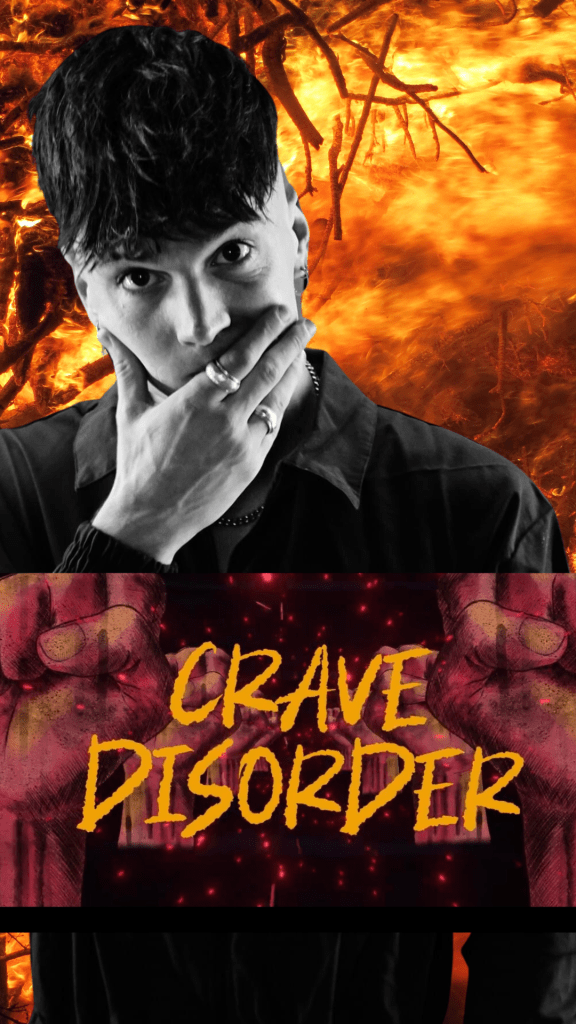
“Lost All Faith”, the second to last track dropped before the release, became a quick favorite among many listeners. It, like many songs on this album (and some previous), speaks directly to the crisis of faith Ren experienced as a result of his illness. It is not the only song on the album to do so. In fact, this theme is addressed clearly in the opening track of the album, “Seven Sins.”
It is a common reaction to suffering to doubt the existence of God, and for those who are agnostic, either by nurture or nature, it seems natural to have some questions they want some answers to (see Ren’s “Dear God”.) “Lost All Faith” has certainly engendered plenty of conversation, as many of Ren’s songs do, from the first few bars.
Lyrics
Intro:
-Oi, oi, you, you, you, you, you
-Ah, mate, I’m in a bit of a rush right now
-You’re a sick guy, fam
-Ah, thanks, mate, I’ve… I’ve-yeah, I-
-You’re a sick boi
-I’ve, I’ve gotta get the train, mate, I’m, really sorry
-Yeah, you know who I’m talking to, boi! Hey, hey, hey! Can I get a quick picture, mate?
-Um, nah, mate, I’ve gotta go, mate
-Oh, come on, mate, just a little cheeky picure for the Instagram, yeah?
-I’ve really gotta go, mate, I’m sorry, man
-Nah, nah, nah, nah, come on, come on!
-Aight, aight, fine, quickly
-I knew it was you, I knew it was you!
In the opening scene, Ren is beginning to get some recognition. “Oi! Oi!” The rando on the street recognizes Ren, but perhaps not enough to call him by name. He just knows he’s the “Sick Boi” and might be famous, or at least potentially so. Randoman is presented as a stereotypical “fanboy”: pushy, disrespectful, leaning on the false assumption of a parasocial relationship to think Ren somehow owes him his time or energy (or at least a “cheeky little picture for the Instagram”.) Despite the fact that Ren is in a rush, trying to catch a train, he is somehow expected to stop and acquiesce to Randoman’s request for a chat and a photo.
Ren, from what we’ve seen of him, is a genuinely kind person, and here he allows himself to be persuaded to give in to Randoman’s repeated demands. This leans into the role Ren plays of a pacifist, as mentioned in “Masochist,” you know, the one that gets taken advantage of? Perhaps there is part of this Ren that is a people-pleaser, who always wants to be kind and never disappoint, even when it is to his own detriment.
For what it’s worth, this scenario fed into a deep and visceral discussion on the “Ren’s Rabbit Hole” Facebook group, where many die-hard Renegades often refer to him as “our boi.” What would we do, we asked ourselves, if we were to see Ren out and about? What would be the respectful way to behave towards the artist we deeply admire?
Most people agreed that they would not approach him with demands or requests, but simply acknowledge with a nod, wave, or quick word. The consensus seemed to be that appropriate behavior was paramount, regardless. Ren’s devoted fans, for the most part, are respectful and protective of the man who has affected them so profoundly.
As he becomes better known, however, and his popularity increases (inevitable after gaining the #1 spot on the UK charts), he is likely to encounter a larger number of fans who are less dedicated to maintaining a respectful attitude, or less willing to recognize their “favorite celebrity” as someone fully human and needful of privacy,
Parasocial relationships, in which admirers believe they “know” a public figure and have a personal relationship with them, can be very disruptive to the target celebrity, especially in public. Feeling like they have to be “on” or accessible at all times must be exhausting and stressful, especially for an introverted person. It’s hard enough for an average person when our attention is in high demand from our work or family; imagine if it was coming at us randomly, from all sides.
In this verse, perhaps, Ren is contemplating what it might be like to be recognized on the street as the “sick boi.” He was already relatively well known in Brighton at the time this song was written, but these days, he is recognized by Uber drivers around the world, and soon, Randos everywhere will likely be clambering for a cheeky Insta pic.
Verse 1
Bar 1
Oi! I’m a charming fella, I like drinking cans of Stella
See I’m living for the weekend, bad kebabs and Salmonella
Cinderella story, rags to riches, spin it full propeller
I’m Nigella Lawson stacking mozzarella
Ren starts off upbeat and outgoing, leaning into the friendly Ren we see online, or in his more flexy, fun videos. In this verse, our girl Stella Artois comes into play, as it has in several of his songs, starting, I believe, with “Right Here, Right Now”, the Fatboy Slim retake, where he takes a beer right out of someone’s hand and gives it to another fella (Who just happens to be Viktus.) He also mentions Stella in “Down on the Beat.” There is also, inexplicably, a cat-headed woman holding a Stells in “Illest of Our Time”. It must be delicious if even the cat will drink it.
This guy, living for the weekend, might just be the carefree kid we see in “What You Want” or any of the other young fellows we see sauntering through these songs. He’s the one reveling in the newfound fame and recognition, the one seen in the cheeky Instagram photo, the one fans want to see on the street.
Ren compares himself to Nigella Lawson, a celebrity food critic, writer and television cook. Coming from a wealthy family, she has been quite successful of her own accord, and definitely makes the “cheese,” or, as stated here, “stack[s] mozzarella.” This is one of Ren’s many cheese-related bars on this album. Although they obviously all refer to making money, it also brings to mind “Love Music part 2” where he says “serve me with a fine wine and some Cheddar cheese” and refers to “stabbing up cheese, never people, blud.” (Definitely his lighter, “Chippie” character, not the tougher, sometimes darker, personality he channels in his flexes.)
In this verse, all the rhyming words end with –la. There are four traditional end rhymes (Stella, salmonella, propeller, mozzarella) and one typical internal rhyme (fella.) However, the words Cinderella and Nigella also have the –la ending, although they do not fit in rhythmically as rhyming words. Just another example of Ren’s creative word play.
Bar 2
Only joking, I’m an introvert, alone inside my room because my insides hurt
I contemplate existence with consistence in my polo shirt
Then reassert my confidence with compliments I don’t deserve
I calm my nerves by plotting for the day that I might leave this Earth
Oh, wow. It’s another Ren (shades of “Hi, Ren?) and this one has a different tone, both lyrically and vocally. This is the side of Ren he speaks openly about, but of course we don’t often see (because the introvert obviously hides away from the world.) We know, because he has been honest and vulnerable about it, that his pain has led to social withdrawal, depression, and suicidal thoughts. He has contemplated (and based this album around) the themes of faith, society’s insatiable greed, and the meaning of existence in the face of excruciating pain. The fact that he owns a polo shirt, however, has been, to this point, a well-kept secret.
The third line mentions “compliments I don’t deserve.” Anyone whose ever listened to a note of his music knows there is no such thing as an undeserved compliment when it comes to his talent. It seems that Ren, like most of us, suffers from imposter syndrome. Hopefully, with his increasing and undeniable success, he recognizes that he has earned those compliments through his own persistence and hard work. He can be proud of his achievements and still somehow stay humble.
In the end, when one is hurting, it is comforting to know that one day, the pain will cease, at nature’s hand, or our own. Even if we decide against taking our own life, knowing that is an option if life becomes too unbearable might be comforting in an odd way.
The rhyme scheme here is more sophisticated than in the last verse; a mix of internal and external rhyme and assonance. Introvert/insides hurt, for example, has the assonance of the –in with the –urt as the ending rhyme scheme. The second line rhymes existence and consistence internally while matching the –urt end rhyme to the first line. Line three has another internal match (albeit imperfect) with confidence and compliments, and ends with another near rhyme: r, which lines up with the –urt rhymes. Deserve, however, is matched with nerves in the last line, ending with the final near rhyme, earth.
Ren’s writing is so skillful. The blend of what seems like incidental rhymes with catchy cadences not only grabs but maintains the listener’s interest throughout the song.
Bridge
I lift up my eyes to the hills
Pain is my shepherd, my sword, and my shield
I find my refuge in patience and pills
A patient that’s patiently waiting for help
Ren lifts his eyes, as one would while praying. Here, however, his shepherd is Pain. In Psalm 23, the author says, “The Lord is my shepherd.” Pain, however, has usurped God’s position in Ren’s life at this point. It controls and guides every aspect of his life. However, Ren uses this pain as a weapon, as a shield that he drives before him to survive.
Ren’s journey through his illness has been a mastery class in patience, a theme in his music since the days he was first misdiagnosed and searching for answers. (See his early songs, “Patience” and “New York City” for examples of his hopeful optimism.) Over the years, there were times that tested that patience deeply, and medicine did not always provide respite. Even after he began to heal, he has been dependent on medications and vitamins to remain functional. Patience and pills are what has kept him alive, and sometimes, in the face of suffering, they are the only refuge, especially when God (whom many rely on for solace) feels absent.
Even today, in November 2023, Ren is engaging in intensive treatment for the long-lasting effects of his illness, which he may struggle with to some extent for the rest of his life. At least now, however, he has help…something he searched for through many years of suffering.
In this section, there is actually only one set of end rhymes, hills and pills in the first and third lines. In this, they seem almost incidental, and give a rare “free verse” or prose feel to the stanza.
Pre-Chorus
I don’t ever seem to feel well
Can anybody save me from myself?
There’s blood on the leaves where I fell
Coming down
Even for those who have found some relief, those with chronic illness have bad days. They never feel “well” in the same way they did before the onset of the disease. They find a new normal. In Ren’s case, the added struggle of mental health is an ongoing battle. We can be our own worst enemy when our mind tells us that nothing will ever get better.
In the next few lines, there is a metaphorical reference to a fallen angel. Lucifer, as an angel who challenged God, was thrown from Heaven to suffer on Earth (at least for a while.) Ren, in his misery, rejects belief in God and becomes this fallen angel, the perpetrator of his own misery. Blood on the leaves suggests that he is not divine, but fully human, able to feel pain, bleed, and die. He has lost faith, and therefore immortality (just as Adam and Eve did in the garden of Eden.)
Part of Ren’s magic is how often and distinctly he varies his flows. Often he facilitates this through a change in rhyme scheme. In this stanza, he end-rhymes the first three lines (well, myself, fell) and follows with a dramatic descent with “coming down”. We feel like we are falling with him. Once again, he draws us into his experience viscerally.
Chorus
Burn the border, sons and daughters.
Law and order, crave disorder
Praise my selfish ways, I’ve come too late
I’ve lost my faith, I’ve lost my faith
In pain and misery, lashing out sometimes seems like the only choice. It way be done as a method of grasping at control, to release pain and anger, or to claim a place in the world and feel human. “Burn it down” is a feeling many of us have when we are pushed to the limits emotionally or psychologically.
Law and order, of course, is put forth as the ideal, but sometimes the restriction is too great. Sometimes, as Ren has mentioned before, ideas and institutions need to be torn down in order to be built up again, hopefully for the better. Also, at times, the pressure of compliance to “normalcy” can be pushed to its limits by the pain, anxiety, depression, and frustration of chronic illness.
Why Ren feels selfish under these circumstances, I can’t imagine, unless it’s a self-imposed judgement for “wallowing” in his own feels. For such an empathetic person, it seems he occasionally fails to extend empathy to himself. Those who suffer may focus on themselves a lot, because caring for others sometimes takes energy we just don’t have. Like he says elsewhere, sometimes it’s okay to step off the path of “righteousness.”
Losing one’s faith, as I said above, can be forgiven in what feels like abandonment or betrayal by the Powers That Be.
Here, part of the power of the chorus resides in the rhyming pattern. Strong internal to external rhyme, one set repeated in each couplet augments strong word choice and creates an impeccable rhythm that brings power to the chorus. Couplet one leans on a –er scheme (border/daughters, order/disorder) while the second exhibits more of an assonance using the –ay sound (ways/late, faith [x2]).
Verse 2
Bar 1
Oi, you’ve awoke a beast
I’m a geezer on the streets
Mona Lisa, this is art
Make her moan, at least she needs my meat
Eenie meenie minie Mohammed, I be Ali
Pleased to meet ya, mate, who’s the G?
Oi! It’s confident Ren again, in another incarnation, the flexer, the tough and cool one. The “geezer”, or guy on the street. (This word was a bit confusing to me as an American, because in the U.S. geezer usually refers to an old man, and specifically an eccentric one.)
This geezer, though, is happy to posture and brag; he bags the hot women (Mona Lisa is not only beautiful, she’s “art”…although getting the girls is also considered an art to guys like this) he’s tough like Ali.* He’s cool with meeting Ren, “Who’s the G?” He asks, probably expecting a response from a peer of equal confidence.
*This is the ubiquitous Muhammed Ali reference (spelled above as “Mohammed” to point back at “eenie-meenie-miney-mo”.) He uses this same clever phrasing in “Masochist”.
This set of lines utilizes basic end rhyme, with a cheeky internal rhyme in the second line with the insertion of geezer (still chuckling as I’m picturing an old man.) Otherwise, it’s pretty standard (beast/streets/meat/Ali/ G) although there is some delicious alliteration throughout (Mona Lisa, moan, meat, meenie–miney–mo, mate) and the clever Mona Lisa/ moan at least. There is slight diversion where he breaks up the rhythm with the off word “art.” These disruptions in rhyme and diversity in poetic devices cause dissonance that clicks in the brain and catches/keeps our attention. Genius.
Bar 2
Not me – an irregular guy
Halitosis with psychosis, omens etched in my mind
Overdosed on pills and potions, a collection of mine
Split a Valium with a Xanny and I mix it with wine
It’s not so. Modest (insecure?) Ren responds. He’s not the G. He’s not even a regular guy. He’s “irregular”: odd, different, even undesirable with halitosis (perhaps from medications, causing dry mouth and bad breath) and his thinking is disordered (also, likely, from misdiagnoses and inappropriate prescriptions.) The medicines he takes are overwhelming. He mixes and matches, anything to ease the pain.
End rhymes (guy/mind/mine/wine) utilize an –i assonance. The stanza is enhanced by internal rhyme (halitosis/psychosis, omens/potions) and alliteration (pills/ potions.) There is also a lovely assonance in etched and collection.
Bar 3
Oi, pull yourself together, mate, pull your socks up, stand up straight
Look at you, you’re such a mug, God, you’re such a fucking state
Honestly, I wouldn’t be seen dead with you in public
Depressed and disorderly, it’s like you fucking love it, mug
The geezer is not impressed. It’s easy for those who haven’t had the experience of physical or mental illness to tell others to “get over it”, pull themselves up by the bootstraps, or “get it together.” Unsolicited medical advice is another form of suffering people with chronic conditions endure, as if they haven’t tried everything. Ren has definitely been there, going as far as having a fecal transplant (which led to an autoimmune reaction which then led to psychosis) and going to a shaman as a result of that psychosis. Suggesting yoga or essential oils, or worse, telling folks to “just deal with it”, is less than helpful, it’s insulting. Chronically ill folks deal with it every day, while enduring pain that would topple many healthy people.
The not so helpful fellow (who was so willing to be a mate earlier) refers to Ren as a “mug” which can sometimes be defined as a “fool” or “blockhead” (Merriam-Webster). It seems here, more accurately as a term for “stupid person” or “idiot” (Urban dictionary).
Seems to me that the geezer is the actual mug.
In this stanza there is a particular syllabic rhythm in the first couplet that serves the flow well. After the initial “Oi”, two sets of (lucky number) seven in each line offers a punctuation that commands attention. The internal-external rhyme scheme (a/a/b/a: mate/straight/mug/state) provides additional percussion.
The second pair of lines offers us a bit of alliteration (dead/depressed/disorderly; all downer words, for what it’s worth) and the near rhyme of public/love it (with an bonus “mug” at the end for emphasis.)
Bar 4
Maybe you’re right, maybe it’s Ren, do it again and again and again
Maybe I’m high, maybe I’m meant to live in a cycle of anti-survival, amen!
In a prism light bends, shut the iris on the lens
Make believe and play pretend, God’s my witness in the end
Ren, like many in his position, finds it easier just to agree. “Maybe I’m just fucked up. Maybe it’s easier to just get high and feel a little less like shit. Maybe I’ll fake it and pretend that I’m okay.” (In the song “Sick Boi”, as well as in interviews, he mentioned trying to do this while he was working with Sony.) Here you can see Ren trying his best to appear “normal” when his body is screaming and his mind is dark. You might see the “light through a prism” as fractured and diffused, and eyes closed to bring darkness, a place of both refuge and despair.
The cadence in this verse has an interesting rhythm, each of the first two lines beginning with two groups of four syllables, and ending with an irregular syllable pattern. Right in the first line rhymes imperfectly with high in the second line. Back to the first line, he rhymes Ren with again (and again and again.) All of the rest of the rhymes, internal and external, pick up this same –ending ( bends/lens/pretend/end)
Bar 5
With God as my witness
I walk through the valley of the shadow of sickness
I fear no evil, I need no forgiveness
Deliver me from temptation, He never listens
Once again, Biblical references come to the forefront. God has changed positions from Shepherd (that role now belonging to Pain) to passive witness. Ren walks through the valley introduced in Psalm 23 (quoted earlier), but in this case, it’s the “valley of sickness” rather than ‘death’ (although that might be an artistic decision, as they seem like neighboring valleys if not the same.) Still he fears no evil, for, as he’s said before, “when half your life is spent with death, you do not fear the reaper” (“Ready For You”.) Boldly, he claims he needs no forgiveness. This might be because he feels that his suffering has been great enough to redeem any potential sin, or simply that he’s given up on any belief in the existence of Heaven, in which case, what is the point? Still, he quotes a line from The Lord’s Prayer (“Deliver me from temptation” ), followed with the thought that “he” (presumably God) never listens anyway, so why even resist temptations or ask forgiveness for one’s transgressions?
This verse goes back to simple end rhymes with witness/ sickness/forgiveness/listens. The end rhymes are near rhymes, but lean on the alliteration of the /i/ sound within.
I don’t ever seem to feel well
Can anybody save me from myself?
There’s blood on the leaves where I fell
Coming down
Burn the border, sons and daughters
Law and order, crave disorder
Praise my selfish ways, I’ve come too late
I’ve lost my faith, I’ve lost my faith
I lift up my eyes to the hills
Pain is my shepherd, my sword, and my shield
I find my refuge in patience and pills
Ren takes us out of the song with his powerful bridge/chorus. During his outro, he adds in a stunningmusical sample, with an Eastern-influenced tonality and rhythm. Through the melody, a woman repeats a line which after intensive listening and debate, is yet to be clearly determined. Some think sounds like “You’re Nirvana, could you be the one” and others think it’s more likely “You’re my armor, could you be the one.” (After several careful listens I think it’s more likely the latter.) Ren himself has stated he doesn’t know what the lyrics are, he just thought it was a cool sample.
Final Thoughts
“Lost All Faith” reflects a side of Ren that is very different from his early music; absent of patience, hope, or positivity. This is honest despair that comes from the extended suffering we were introduced to in the first bars of “Seven Sins,” the first song of the album in which he writes his own eulogy. Ren’s loss of his health, both physical and mental, led to a feeling of defeat and helplessness in his search for the comfort many find in their faith. In the worst years of his illness, culminating in 2015, he was deprived of his ability to make music, something he has often said is the closest thing to God he has ever known.
It’s useful to note that Ren’s loss of faith extends from Heaven back to Earth. There is little for him to have faith in when his dreams of a career have been shattered by illness and his body has been wracked by medical neglect. When deprived of the one thing you love the most, its hard to have faith in anything or anyone, whether doctors, society, or God.
It’s interesting to consider which of the seven sins “Lost All Faith” might touch on. In traditional theology, the loss of faith is technically related to the sin of Sloth. Not making the effort or having the willingness to serve God was considered lazy and self-indulgent in the eyes of the early church. The critic Ren also exhibits Pride in his superior attitude towards the less confident version of himself, showering him with contempt while posturing in his own self-centered vanity.
Even though he isn’t asking for forgiveness, anyone who has ever suffered loss and/or questioned God’s compassion, presence, or existence can offer empathy in the light of the artist’s pain. We can forgive him (whether or not he needs it) for not “pulling [his] socks up” and being positive 24/7.
Until next time,
Oi, Renegades!
c. 2023 D.B. Myrrha
 Rendezvous
Leave a comment